“Before I knew I was going to the Derby, I had my shrink on call. It’s a special, special moment.”
Bob Baffert, top American horse trainer with a record six Kentucky Derby wins at the time of writing.
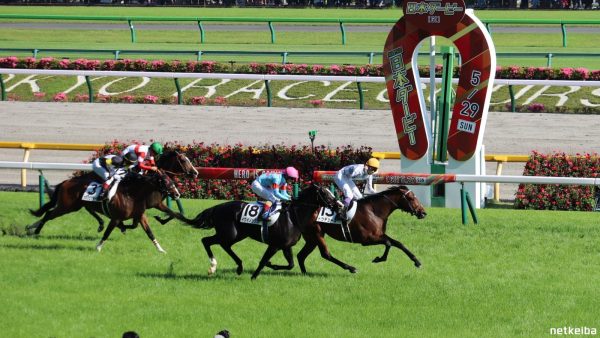
Every year, between 7000 and up to 10,000 foals are registered in the Japanese Racing Association. Around half of them will be able to win a race be it their debut or a maiden. A fraction of them will either win at least 1 graded race or reach up to a total of 3 wins. Up to 18 will enter the Japanese Derby. Only 1 will run out as a winner. The Derby is the ultimate exam on who is the best of their generation.
Introduction & Context
Whenever fans think of a major horseracing event, the first word that might come up in their head is “derby” – usually reserved for the top country-wide competition. The word originally referred to the Manx Derby which was started up by James Stanley, 7th Duke of Derby and also Lord of the Isle of Man where the race was held, before being remade in 1779 by Edward Smith-Stanley, 12th Duke of Derby, with help from Charles Bunbury, the Jockey Club Stewart. The newly-founded Epsom Derby wasn’t the first Classic horse race in British history but its often-lucrative purse money which basically just means prize pool, longer distance, age-restriction for 3-year olds only, and mainstream coverage makes it the most prestigious out of the others.
Many countries around the world, Japan included, sought to follow the same layout as the British Classics with their own Derby being the crowning jewel should owners and trainers not be interested in taking part in all 3 available Classics which make up the Triple Crown. The Japanese Derby, also known as the Tokyo Yushun, was inaugurated in 1932 with Wakataka emerging as the winner. The later addition of the Satsuki Sho and the Kikuka Sho in 1939 and 1938 respectively led to the founding of the country’s own Triple Crown with the former and latter making the first and third leg. It didn’t take long for the milestone to be reached in 1941 with Saint Lite winning all three races before retiring a year later to stand a quiet career as a stud.
Since then, becoming a Triple Crown champion is a key achievement for most trainers, owners, and breeders to aspire to accomplish in Japan. Most of the countries gradually distance themselves away from the milestone as their racehorses saw themselves become more specialised in their distance which makes getting a clear contender a tough ask. The only other country where horseracing remains a major sports scene/industry for decades and where going for all 3 legs is a continuous key goal is arguably the United States. Even as Japan is seeing some of its industry figures opt for specialising their racehorses towards 2000 metres with the Autumn Tenno Sho being a go-to Group 1 for 3YOs over the Kikuka Sho, taking part in all of the Triple Crown remains as a tradition even if the revisiting entrants are struggling to find their footing.
The Triple Crown champions are often regarded as an all-time great in the country’s history. These include: Narita Brian, whose widening margins of victory in 1994 stand as a testament towards his dominance in the mid-1990s; Deep Impact in 2005, who carried a total of 7 G1 wins before retiring at the end of his 4YO season to become a top sire; and Contrail, the son of the latter whose 2020 success broke ground as the first father-son duo to achieve the milestone without a loss during the streak.
Other winners of the Japanese Derby include Ines Fujin, who managed to accomplish the win through a rare frontrunning endeavour in 1990; Neo Universe, whose dramatic 2003 success as a double Crown victor catapults his jockey Mirco Demuro to stardom among Japan’s spectators; and Jungle Pocket, who remains the only racehorse to both win the Derby and the Japan Cup in the same year in 2001. The champion last year was Croix du Nord who is currently vying to become the country’s first Spring Triple Crown champion but we’ll get to that later.
Race Layout and General Assumption

If there’s one difference between this race and the Japanese Oaks that is dramatic all on its own despite its 2400m for distance, then it’s that I would describe the Derby as being high-variance. Even barring the switch-up in entrants who might have tired out from running in the Satsuki Sho’s 2000m, the significance of the Derby alone means that this will be the race where jockeys are going to give their all in guiding their rides to a glorious victory. Where trainers will eye up the fastest training time possible for their entries. And where the racehorses themselves will be in the best health they can be to guarantee their performances. Chances are relatively high that a runaway bid is in play as well as clutch movements into tight spots and some willingness to run on rougher terrains if it cuts some time for a possible win.
Fans often speculate on the “Derby horse” who on paper should stand out as the major favourite to win the race. Descriptions and details surrounding it often tends to involve: a stacked pedigree that allows them to be a jack of all trades, one of the best spurts out of their generation to deal with the long final straight in Tokyo, a stamina to deal with running up to 2400m without being a full-on stayer, and an obedient mindset to trust their jockey to know the best possible moves being made. In other words, the “Derby horse” is almost functionally like a Triple Crown champion even if they aren’t perfectly built to the point of winning the Satsuki Sho and the Kikuka Sho as well. What matters is that they’re balanced enough in their performance to handle Tokyo Racecourse with ease.
The classic adage surrounding the Triple Crown races goes (and I’m paraphrasing) “the fastest wins the Satsuki Sho, the luckiest wins the Derby, and the strongest wins the Kikuka Sho”. While upset wins are actually rare with the biggest case being Roger Barows as the 12th favourite in 2019, the consensus points toward the importance of being well-rounded with clutch decisions by the jockey being the key factors. The Japanese Derby’s requirements sum up that of the broader Triple Crown races even if the winner ought to skip the last leg in favour of either the Autumn Tenno Sho, the Prix de l’Arc de Triomphe, or other G1s that the owner/trainer might be interested in.
Entrants

Favourites
Often well into the single-digits with their betting odds, the favourites possess the credentials, sky-high individual performances, and the pedigree which should allow them to deliver in the race.
Gate 11 – Realize Sirius, Frontrunning Poetry (Colt 3, 2 graded wins)
Sired by one of Ireland’s top milers in the first half of this decade in Poetic Flare, Realize Sirius has been hitting out the gates with strong performances so far in his career. His worst performance so far was 5th place in the G1 Asahi Hai Futurity Stakes last year which tends to be populated with prospective milers. Otherwise and with the trusty help from his main jockey Akihide Tsumura, he sticks out among those whose preferred position is towards the front by his gutsy ability to prevail even if he’s running on a long final straight as evidenced by his 2 graded wins in last year’s G3 Niigata Nisai Stakes and this year’s G3 Kyodo News Hai.
Even in his last start that is the Satsuki Sho where he’s unable to secure his ideal position of being a clear pacesetter, he’s able to stick being second in position to Lovcen throughout the race. Some pundits argued that Realize Sirius lost the race due to being spooked by Tsumura’s whip use compared to Lovcen’s responsiveness. Little aspects that show weakness only drives home the hype surrounding the ceiling of his performance. Had he kept his cool instead, could he be able to squeeze out a win even in a suboptimal spot?
Realize Sirius does have some issues going on his belt – but with a good bit of counter-caveat with regards to setting some milestones. He is likely going to be the frontrunner should he be able to wrestle control against Lovcen compared to the last race run in a racecourse where conventional wisdom discourages being in the position. And he’ll be running an even longer distance than the Satsuki Sho which puts his stamina in question even with his European pedigree in mind. Chances are high that entrants will have a sharp enough spurt to overtake him on the last few metres of the race. And Tsumura did suffer a fall just recently that he’s been cleared of, but there’s a good chance that he’ll jockey more cautiously to avoid a worse injury.
All that being said, it’s very possible for a clear frontrunner to win the Japanese Derby with the last winner to pull off the feat being Sunny Brian in 1997. Tsumura is starving for a second overall G1 win despite doing well this year with successes in the Satsuki Sho’s main trial races in particular. And Realize Sirius has shown a clear track record of delivering in longer straights despite his position. His training time oscillates between an absurd 79.7 seconds clock-in for his 6 furlong time and some prep-work on his spurt in this week’s training from 37.5 for 3F to 11.3 for 1F. If there’s anyone who could pull off a historic win in the Derby by a wire-to-wire run, he might be able to pull it out of the bag.
Gate 14 – Going to Sky, Father’s Finest (Colt 3, 1 graded win)
Going to Sky is the son of Contrail who, as mentioned earlier, was the last Triple Crown champion back in 2020. For some extra context surrounding him as a sire, he’s been struggling to find a child of his first crop whose performance can be seen as comparable to his with prospective names like Badrinath struggling to leave a big mark. The silver lining at least is that his kids are starting to perform better this year as 3YOs but the question mark still remains on what kind of specialty he might fit in. Worst-case scenario, he might be a stayer specialist in a market that already has Kizuna, Rulership, and Kitasan Black on top of new additions like T O Royal for this year.
Going to Sky himself is aiming to be the exception to the disappointment. Following a string of respectable placements that culminated in a disappointing 6th place in G3 Kisaragi Sho this year, he got his main jockey swapped out from Kiwamu Ogino to the veteran Yutaka “John Umamusume” Take. The result proved immediate as he managed to qualify to the Derby by winning one of the key trial races in the G2 Aoba Sho through solid positioning and an earnest spurt with a L3F time of 33.4 seconds. The race itself might have been overshadowed by the passing of 2nd favourite Noble Savage, comments surrounding Going to Sky in the lead-up to the Derby are rife with compliments that he’s even better now than his first graded win. His training time is a good hint of what is to come as he’s able to flip between leaving a devastating burst from last week’s video and being able to keep up with a faster tempo for the race week even if it’s a bit slower than Realize Sirius’s and Lovcen’s own times.
There are a few disadvantages surrounding Going to Sky’s chances of winning the Derby even if they might come off as nitpicky. While the Aoba Sho is among the designated trial races, it seems to function much better as a long-term predictor for top stayers than it does a Derby champion as none of the winners are able to place further than 2nd place in the Derby. Take himself is still capable of pulling off stunning moves and crisply optimised positioning, but it’s more inconsistent compared to his streaks of prime although that might be to do with him not acquiring the top rides from Sunday Racing and other Shadai-affiliated syndicates. All that being said, Going to Sky does possess the showings from his graded title so far to suggest that he could break the curse to lift the coveted trophy while Take is able to stretch up to 7 Derby wins in his illustrious career.
Gate 17 – Lovcen, Premiering a New Era (Colt 3, 2 graded wins including 2 G1s)
The generation who are taking part in the Derby this year are thought of as being among the most talented Japan ever has with several race records already being broken and many more coming close to it. Yet, one stands tall as the prospective favourite for the Triple Crown. Lovcen is the name that keeps on echoing in town. And he won the Satsuki Sho with a whopping achievement of setting a race record by half a second all the while frontrunning his way to a win.
Lovcen is initially thought of as a dark horse who’s a 7th favourite when he collected his first graded title in the G1 Hopeful Stakes last year. His father World Premiere is regarded as among the country’s top stayer with 2 G1 wins in the 2019 Kikuka Sho and the 2021 Spring Tenno Sho, but initial impressions regarding his potential as a sire were low. The lucky combination with a broodmare who’s sired by top Irish-trained racehorse and sire Giant’s Causeway creates the combo that favours Lovcen. The pedigree comes together for him to excel in 2000m as a baseline which allows him to net his first graded win from the midpack position along with a respectable 3rd place in the Kyodo Nisai Hai by coming just behind Realize Sirius and Bereshit.
Lovcen has a lot of pros to go in his favour. Aside from his pedigree, his training time from last week stands as being among the most impressive with 80 seconds for his 6F time with his trainer Haruki Sugiyama even implying that he’s not tired out from it at all. His main jockey Kohei Matsuyama also understands how to ride him to the best of his ability with clear Classics credentials by riding Daring Tact to a Triple Tiara sweep in 2020. His positioning versatility are worth commending as well with his Hopeful Stakes win coming from a late surge, his Kyodo News Hai 3rd place being a pace chaser, and his Satsuki Sho claim from frontrunning.
If there’s an Achilies’ heel that I need to throw in for Lovcen, it’s that there’s a good bit of documentation that he’s the kind of racehorse who does what he wants to do. On one hand, this sign of above-average intelligence is a big indicator of an all-time great like Symboli Rudolf based on his main jockey Yukio Okabe’s comments. On the other hand, Lovcen’s brilliant frontrunning endeavour in the Satsuki Sho could signal a possible lack of discipline based on an interview with Matsuyama. Should he be able to truck through to win the Derby in his own way despite getting the second outermost gate opening, that’s all the more power for him especially with the Kikuka Sho entry being in the cards for a historic opportunity. If he starts to waver from doing whatever he wants, that’s a sign of a million bets being burned in the process…
Dark Horses
With odds between 10 and 30-40 depending on the favourites, they look unremarkable compared to the top favourites. They do however have a notable history of placing well in graded titles and should the entries be stacked enough, even win at least 1 themselves. They simply appear to lack the “X-factor” needed to win the biggest championships in the country.
Gate 1 – Reichsadler (Colt 3)
Jockeyed by Daisuke Sasaki, Reichsadler might not have won a graded title yet, but he never placed below a 3rd so far. In the Tokyo Sports Nisai Stakes, he clocks in the tied 2nd fastest L3F time of 32.9 seconds behind Zoroastro and winner Peintre Naif with the latter winning thanks to Christophe Lemaire’s great initiative of moving him forward on the final corner. In the G2 Yayoi Sho, he shows his acceleration well through his ability to run up the slope on the final straight with ease and in the Satsuki Sho, he’s able to find an opening that allows him to squeeze through to 3rd place despite the blistering pace. With the longer final straight in Tokyo, a window of opportunity is there for him to excel to the best of his ability. However, will he be able to seize it?
Gate 5 – Basse Terre (Colt 3, 1 graded win)
Basse Terre is one of 2 foals of Kitasan Black who are racing in the Derby with the other being the more blue-blooded M’s Begin. While the latter did disappoint with a 7th place in the G2 Kyoto Shimbun Hai (although he was blocked to be fair), Basse Terre could be described as having a natural talent in accelerating. His first graded win in the Yayoi Sho saw him fly from the back to a 0.75 length lead with remarkable ease. In the Satsuki Sho however, the tempo is so fast that he struggles to pick up any more of his speed from his back-end positioning to place in the top 5 let alone win the race with an 11th place although he did clock in a L3F time of 33.6 seconds. His training time highlights his spurt being sharpened up with this week’s video showing a 3F time of 38.2 compared to the 1F time of 11.4. Could this be his time to shine?
Gate 6 – Congestus (Colt 3, 1 graded win)
Another Contrail foal who’s running in the race and with an unbeaten streak to boot, Congestus’s graded win feels more unimpressive than Going to Sky’s. The Kyoto Shimbun Hai have devolved into a stamina battle to see who’s able to reach the finishing line first with Congestus having just about enough from running in the midpack to edge out top favourite Bereshit by a neck. In preparation for the race, he’s running on the slope with last week’s time having clocked a slow 4F time of 60.1. He’s able to improve it down to 54.1 this week but he’ll be hoping to pull off a sharp enough spurt to prevail against the odds.
Gate 9 – Audacia (Colt 3, 1 graded win)
The winner of the G2 Spring Stakes might enjoy the automatic berth of the Satsuki Sho, but concerns surrounding his health caused his connections to instead rest him up for the Derby. Seeking a new temporary partnership with Damien Lane who rode Laughterlines to 3rd place in the Oaks last week, Audacia has shown a solid turn of foot in his graded win so far as he manages to edge out Ask Edinburgh by a neck. His training time does look a bit sloppy though as this week’s video saw him clock in a 1F time of 11.9 down from the 3F time of 38.2 which suggests a weakening of his acceleration. Hopefully this is a sign of a more relaxed training given that last week’s time is a more average 11.7 1F time down from 37.2 for 3F.
Gate 12 – Ask Edinburgh (Colt 3)
Ask Edinburgh is a pretty earnest colt. Without a graded win to boot so far, he’s able to place well in races over a mile as outside of his win in the listed Cosmos Sho, he’s placed in the top 3 in 3 consecutive graded races including a Hopeful Stakes 3rd place. In the Satsuki Sho, he lands in 4th place despite coming through as an underdog as the 12th favourite. His training time both from last week and this week might not look the most impressive, but he does have a few cards up his sleeve. His main jockey Yasunari Iwata is a dependable one whose older age still has yet to prevent him from wavering horribly in collecting graded titles with 1 being won this year in the G3 Ocean Stakes. His trainer Yuichi Fukunaga has tailored much of his training to minimise stress and to further add to the bond between him and Iwata. Cheesy as it seems, the power of friendship could well await Ask Edinburgh’s dramatic first graded win.
Gate 13 – Peintre Naif (Colt 3, 1 graded win)
Perhaps one of the closest out of all the entrants whose training time are at least able to close in on the lightning-fast precedents set by Realize Sirius and Lovcen’s, Peintre Naif is looking to shake off from bombing out of the Satsuki Sho. His main jockey is Lemaire who at this point I don’t think I need any more explaining (might need a dedicated page here to jockeys). His 6F time both last week and this week oscillates around 81.6 with a sharpened spurt to boot. His specific bit of training shows him being able to pick up his speed despite being surrounded on both sides which points well to his manoeuverability. As long as the pacing doesn’t prove itself to be too fast and he’s able to find his own rhythm for breathing, Peintre Naif has the potential to claim the Derby in his own way.
Gate 15 – Forte Angelo (Colt 3)
Sired by one of the country’s top stayers over the last half of the 2010s in Fierement, the extra boost of acceleration from broodmare sire Dark Angel from the British Isles make Forte Angelo look remarkably competitive. He’s able to place 2nd in the Hopeful Stakes and squeeze into the top 5 in the Satsuki Sho with consistently solid L3F times to boot. His training time seems to acknowledge his turn of foot as the priority sits on readying him up for a possible fast tempo. His 6F time of 83.3 last week went down to 82.8 this week along with his other clocked times. He might not look as cracked as Lovcen, but he does have the pedigree to rival him when it comes to the Derby title.
Gate 16 – Green Energy (Colt 3, 1 graded win)
The son of Suave Richard is hoping to follow down a similar route as Regaleira by exhibiting a sharp spurt that leaves a lot of sharp L3F times in most of his starts. His last start in the Satsuki Sho saw him lag behind others in 7th place as the 2nd favourite but he’s able to exhibit the 2nd fastest time of 33.6 seconds from a better position compared to Basse Terre. His training time does leave some bit of red flags however in that while he can still clock in a great 1F time of 11 last week, his other clocked times are getting slightly slower as if to suggest that his acceleration is weakening. Could the blazing speed from the last race really left him gassed out a bit too much? His fans would hope that that isn’t the case.
Handicapping
Essentially my predictions of who will go into the top 3 with 1 extra mention going to a contender outside the single-digit favourites who has a high chance at an upset, I feel that they are in the best possible form to win the race.
1 – Going to Sky
An outer gate opening that isn’t too far out as to put his stamina and manoeuvrability to the test, a legendary jockey, and a notable turn of foot might set Going to Sky up for success. He might not look as scary as Lovcen or Realize Sirius based on the training time, but hopes are well and truly high that he’s ready for the more unpredictable side of the Japanese Derby. He can adjust with the tempo and his spurt will always be available for a push to glory. It would make for a poetic success story for him to be the first among Contrail’s kids to win a G1 race and for it to be one of the country’s biggest.
2 – Realize Sirius
Realize Sirius has shown a notable talent so far in being able to prevail in longer final straights as evidenced by his 2 graded wins so far. His training time sticks out as being among the best for how blisteringly quick last week’s one looks along with this week being based on priming his spurt. Tsumura is the clear expert when it comes to frontrunning so while a guaranteed win might be a bit much, a great frontrunner will not be willing to give up their lead easily. Realize Sirius is hoping to be that frontrunner.
3 – Lovcen
The combination of the outermost gate opening alongside his seeming records of being undisciplined makes Lovcen a bit of a wildcard. Should he be able to win the race despite his disadvantages, all cards are on deck for him to become the Triple Crown champion. Otherwise, he’s likely going to be put in an uncomfortable enough position to struggle working around in and it doesn’t help that his training time, great as it looks, doesn’t feature him running while surrounded by training partners to test out his ability to perform under pressure and his manoeuvrability. All that being said, his performance ceilings are too good to pass him off as a loser.
Upset – M’s Begin
Yes, the complete underdog. Yes, the one who hasn’t won any graded title as of now. Yes, the entrant whose odds are in the hundreds could have what it takes to pull off the heist of the century. His training time this week looks too slow barring an insane turn of foot from a 3F time of 40.7 down to a whopping 11.9 1F time, but last week’s one shows him having a 6F time of 80.4. That’s comparable to Realize Sirius’s and Lovcen’s! His main question mark is that his main jockey Yuga Kawada has basically ditched him following his Kyoto Shimbun Hai disappointment for Basse Terre (traitor). He’ll need to partner up with Brazil’s Francisco Goncalves who’s riding on a temporary license. Could you imagine how crazy an upset win would have been should he get into his ideal spot and with a temporary replacement to boot as well?
Leave a Reply