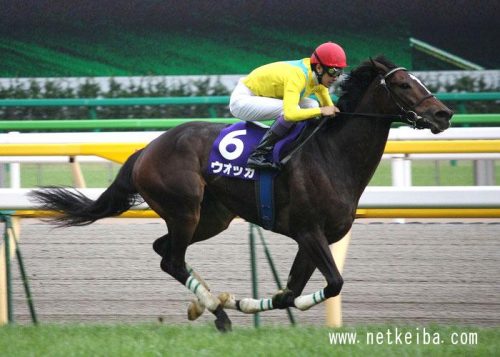
“I had long been waiting and working hard to be able to stand on this podium as a G1 winner and it feels really great that I have finally made it. The race development, from the start up until the final corner, exceeded my imagination and it was just a matter of how much the mare could extend her strides from there. When we were actually leading in the last 200 meters, it was almost unbelievable. I am grateful for the fans that have been rooting for me and I hope this is just the start of more victories like this…”
– Akihide Tsumura, on winning his first Group 1 race in the Victoria Mile on Ten Happy Rose, 2023.
Fans of Umamusume often wonder about the significance of two races – the Queen Elizabeth II Cup and the Victoria Mile. While the former has been around since the 1980s, the latter is only around 20 years old. Mainstream coverage might know the race best for Vodka’s win in 2009. Yet, look a little deeper and you’ll find ambushes that await even the best. It is anyone’s game. Its recency and restriction of the horse’s sex makes for a more high-variance condition that’s ripe for any major upsets.
Introduction & Context
The Victoria Mile is the most recent race in Japan to be made with an immediate intent of being a G1 race. For a long time, the only filly/mare-only race that’s catered to female racehorses is the Queen Elizabeth II Cup that once stood as the third leg of the Fillies’ Triple Crown (or the Triple Tiara). With the general assumption that female racehorses are weaker than their male counterparts, the Triple Tiara along with filly/mare-only races are seen as less impressive. The QEII Cup however underwent many developments as the Japanese Racing Association sought to diversify the filly/mare-only races through the inclusion of the Shuka Sho as the official third leg of the Triple Tiara in 1996.
With the QEII Cup being open to 3-year olds and up, another race is needed to cater for older racehorses following the Triple Tiara. This led to the creation of the Victoria Mile with the additional characteristic being that it’s at a distance of the mile (thus the name). This in turn comes off as another addition for runners who specialise in shorter distances which means that while mares with more experience or more optimised pedigree or training towards that are likely to perform well.
An example of that is the latest winner in Ascoli Piceno from last year. Sired by Daiwa Major (yes, Daiwa Scarlet’s brother) who excels in a similar distance, she won her first G1 in the 2023 Hanshin Juvenile Fillies with other graded titles including the G3 Niigata Nisai Stakes in the same year, the G3 Keisei Hai Autumn Kneecap in 2024, and G2 1351 Turf Sprint just before this race. Despite the other additional success which includes 2 2nd places in the G1 Oka Sho and the G1 NHK Mile Cup in 2024, she’s in a deep slump with an injury to boot as of late. After her Victoria Mile win, she flopped in her European expedition soon afterwards, placed outside the top 5 in the G1 Mile Championship, then began her 5YO season this year by placing double digits in the G2 Hanshin Himba Stakes just prior to confirmation surrounding her injury. It’s unknown whether she’ll recover to continue with her racing career or if she’ll retire to stand as a broodmare.
Other winners outside of Ascoli Piceno include Ten Happy Rose, who pulled off a major upset in 2023 that puts her jockey Akihide Tsumura on the horseracing map; Verxina, who won the race twice in 2013 and 2014 after placing second to Gentildonna in all three Triple Tiara races back in 2012; and most notably Vodka, who won the race with a whopping 7 lengths lead ahead of the rest in 2009. While the race is open to all kinds of female racehorses as long as they’re 4 years old or older, the distance combined with the layout being the same as in the NHK Mile Cup makes the race more favoured towards specialised milers.
Race Layout and General Assumption

Under the very same layout as in the NHK Mile Cup, there are nuanced differences between the two races that are worth keeping in mind when talking about the Victoria Mile. Firstly, it’s made to be accessed solely by older female racehorses which means that their bodies are more likely to be developed to withstand the faster tempo alongside the additional undulations. That being said, the perception of female racehorses as being “weaker” than male ones do mean that those who are more comfortable running in 2000 metres or more will enter the race under the assumption that they can win the race with ease especially if they won in a mixed-sex graded race before.
Secondly, the additional criteria of the race being in the same distance does mean that the race will favour those whose pedigree, training, or experience lean towards being a miler. Yet, it also means that the race is more bound to upsets compared to others due to the more limited time for the mare to ready her spurt along with the betting odds being more likely to favour those whose race records look good regardless of how often they run within the mile. In turn, those who have not won any G1s but had otherwise ran extensively in the same distance as this one are more prone to win the race when they’re overlooked enough.
Thirdly, the sex restriction puts a lot more weight on the pairings between the racehorse and her jockey. Jockeys who rode on their designated or selected rides frequently are much more prone to understanding the limits and the strengths that they have which means that they’ll be able to work around them at the time of the race. Of the winners of the race since its inception as an example, the 2 runners who won the race twice in Verxina and Straight Girl were ridden by their main jockeys in Hiroyuki Uchida and Keita Tosaki respectively.
There will be strong horses for sure, but the sex restriction means that jockeys are much more likely to go for those they have a history of riding on and will thus make full use of them. The additional context of the race being only a week before the Japanese Oaks also put notable emphasis on the jockeys to try their best to offer the best ride before chasing the Classics win.
Entrants

Favourites
Often well into the single-digits with their betting odds, the favourites possess the credentials, sky-high individual performances, and the pedigree which should allow them to deliver in the race.
Gate 7 – Queen’s Walk, Chasing Glory (Mare 5)
Queen’s Walk has yet to win a G1 at the time of writing; her records suggest otherwise that she’s vying for this to be her magnum opus. Throughout much of her career, she is able to score some solid placements with 3 graded titles claimed including last year’s G2 Kinko Sho as her biggest win yet. While her preferred distance is around 2000m, her win in the G3 Queen’s Cup in 2024 and her second place in last year’s iteration of this race shows that she might be able to click with this distance. With a gate opening that allows her to be flexible on where exactly she could be positioned, she has a draw that might prepare her for an ideal run.
Queen’s Walk has notable flaws that are worth noting however and while it’s common for 4-5YOs to claim their first G1 should they win a previous graded title, these flaws are especially glaring. Her Autumn Tenno Sho run last year saw the tempo be slow to the point where the final straight resembles more like Europe’s spurting duel to which she clocks a L3F time of 32.8 seconds. This puts her in 9th place with the fastest L3F time going to the now-retired Shirankedo who’s able to reach 31.7 while placing 4th. Should the tempo of this race be on a slower end which is rare, Queen’s Walk should ideally want to at least be able to react to the first use of the whip more immediately compared to others.
This leads to the second key flaw. Her main jockey is Yuga Kawada who had opted to ride Kamunyak rather than her despite having ridden her in all of her starts (traitor). This means that this race will mark the first time she’ll be ridden by another jockey – that being Atsuya Nishimura. Nishimura himself isn’t a bad jockey at all and his record for this year is solid given that he won the G2 Tulip Sho on Taisei Vogue that’s under the same distance. Yet, may I remind you that this race is more rewarding towards mares whose jockeys had rode them for a long time previously. If Nishimura lags behind in identifying key traits around Queen’s Walk like her relatively slow spurt in a slower tempo, she’s going to struggle in a spurting duel.
Gate 8 – Kamunyak, Queen of the Oaks (Mare 4)
Kamunyak is the most recent champion of the Japanese Oaks and her form tends to be regarded as boasting the most impressive highs out of her filly generation so far. With 3 consecutive graded titles on her Classics season, her devastating spurt made her an opponent to be feared. Her main jockey in Kawada is especially no stranger to riding top fillies/mares like Loves Only You or most notably Liberty Island although he had yet to win the Victoria Mile.
All that being said, Kamunyak does have major problems surrounding how likely it is that she’ll be winning the race. For her to bid on the Victoria Mile in the first place does leave some fans confused given her best performances being in 2000m or higher. This puts a wrench on whether she’s capable of reading the tempo needed to execute her spurt perfectly as is ideal for most milers. After all, it’s only until the Hanshin Himba Stakes when she showed that she might be able to run in the mile effectively even though her other starts in the same distance saw her bottom out.
In addition, she’s no stranger to putting out a tantrum that leaves her exhausted and not focused on racing. Last year’s Shuka Sho put her as the clear betting favourite only for her to waver around entering the gates before placing near the bottom due to her running out of her usual position and seemingly disobedient of Kawada’s command. Thus, Kamunyak ideally needs to be both in a good enough temperament to follow Kawada’s best judgements and be ready in her tempo to climb up the numerous hills with ease while still having enough for her spurt. At least her training time on the slope is looking promising with a 4F time of 56 seconds.
Gate 12 – Embroidery, the Double Tiara Miler (Mare 4)
Ridden by her main jockey in Christophe Lemaire and with 2 G1s on her belt, Embroidery is a major talent to keep an eye on should she continue with her winning ways. Last year, she won the Oka Sho and the Shuka Sho in a solid enough manner for fans to keep track of her. While she does undergo through unfortunate fumbles like bottoming out of the G1 Hong Kong Mile at the end of her Classics season, it is at least chalked down to her seemingly being in poor health at the worst possible time. Following that is a seamless win in the Hanshin Himba Stakes as a frontrunner in a clear sign that she’s back in form.
With her resume looking solid and her training time on the slope pretty refined with a 1F time of 12 seconds, Embroidery feels like an easy add-in for a betting favourite. That being said, there are caveats that are worth throwing out. While she doesn’t get the outermost gate opening, her gate opening of 12 could still pose a risk to her. Should she not get into a position that either she’s comfortable in or that Lemaire wanted to take, it shouldn’t come as a surprise if that shakes away her mood for racing. Even if the ideal spot is secured, there still remains the risk of an upset being pulled against her should there be others who happen to hit their strides at a perfect time. Those who are positioned towards the front like her won’t win the spurt battle on the final straight…
Dark Horses
With odds between 10 and 30-40 depending on the favourites, they look unremarkable compared to the top favourites. They do however have a notable history of placing well in graded titles and should the entries be stacked enough, even win at least 1 themselves. They simply appear to lack the “X-factor” needed to win the biggest championships in the country.
4 – Erika Express (Mare 4)
The likely frontrunner of the race, Erika Express won last year’s G3 Fairy Stakes under the jockeying of Tosaki before swapping over to Yutaka Take. With a graded title at the least, she is able to put on a competitive effort like a 2nd place in the Shuka Sho. However, her race records as a whole errs toward inconsistent with a 5th place in the Oka Sho along with bottoming out of the Japanese Oaks and the QEII Cup. How she’ll be able to deliver is contingent on whatever tricks Take might have and whether she’s able to make a wide enough lead to succeed on the final straight.
Gate 6 – Lavanda (Mare 5)
Rapidly rising to notability with a G2 Ireland Trophy win last year, Lavanda has shown her prowess as a miler through other solid placements in last year’s Hanshin Himba Stakes and the G3 Fuchu Himba Stakes alongside this year’s G3 Tokyo Shimbun Hai. Her Achilles’ Heel rests mostly in her seeming preference to turn left which leads to a lot of awkward reactions should she be met with an elevated competition. This race shouldn’t be a major problem to her given that the race is a leftward turn. The real question is on how well she’s able to fare against the top 3 favourites and whether she’s able to provide a sharp turn of foot to win the race.
Gate 9 – Coconuts Brown (Mare 6)
She might not be the best mare in Japan, but she’s perhaps very consistent when it comes to placing well. Ever since she got out of allowances class last year, she’s able to place in the top 3 3 times including 2 2nd places in the G3 Hokkaido Shimbun Hai Queen Stakes and the G2 Sapporo Kinen (both from last year) and a 3rd place in the G3 Kokura Himba Stakes this year. Even in a G1 class, she was able to get 5th place in the QEII Cup. Flexible in positioning and with a steady training time on the slope to boot with an average of around 14 seconds in between her furlong times, Coconuts Brown is not worth overlooking even if she’s yet to win a graded title. Her big question mark however is that while she’s able to place well in 1800m, it isn’t quite as close to a true mile race as she would have wanted and in the first time that she ran in that distance in allowance class, she placed 10th. Even with the win right after, how will she match up in the highest echelon right now?
Gate 14 – Jocelyn (Mare 4)
Bouncing between jockeys and with most of her experiences resting in 2000m, Jocelyn has a lot of cards that are stacked against her. She’s capable of pulling a solid turn of foot as evidenced through her Kokura Himba Stakes win along with a 2nd place in the G2 Shion Stakes. These strengths however might not be enough for her to pull off a win with ease and she still needs to answer whether she’s able to identify the tempo of the race to her advantage and whether she’ll be able to click with her jockey. At the very least, Tosaki does enjoy a solid bit of record in standing in on rides that Lemaire tends to ride with last year’s QEII Cup winner Regaleira being one main example as well as a close 2nd place in the G3 Epsom Cup on Stellenbosch this year.
Gate 16 – Nishino Ti Amo (Mare 5)
If there exists a fairy tale that could be adapted into Umamusume, Nishino Ti Amo might be the protagonist within it. Her owner Shigeyuki Nishiyama is loved for his doting pet owner-like treatment on his best-known racehorses Nishino Flower (who happens to be Ti Amo’s great-grandmother) and Seiun Sky, but he’s suffering from leukemia right now. Her jockey Tsumura is doing very well this year with several graded titles alongside competitive efforts being made, but he’s still in pursuit of finding his second G1 trophy. Nishino Ti Amo won her first graded title this year in the G3 Fukushima Kinen and she placed in the top 5 in the G3 Nakayama Himba Stakes. Carrying the burden of her closest connections on her shoulders, she will be hoping to claim the G1 to make all their dreams come true.
Gate 18 – Cervinia (Mare 5)
The 2024 Japanese Oaks champion is struggling massively in spite of being the Double Oaks winner. Ever since her Classics season, she only placed in the top 5 three times out of 6 starts without a win to boot. Much like with Jocelyn and Queen’s Walk, she’ll not have her main jockey Lemaire ride her for this race. Instead, she’ll be ridden by Danno Lane who, even in spite of his recent success in the NHK Mile Cup, had not ridden her at all under any capacity beforehand. Fans will be hoping that he’ll be able to click with her quirks quickly enough as to hopefully elevate her back into her G1-winning ways. That being said, she doesn’t have the best track record when it comes to miles with a terrible 13th place in the Oka Sho. How will she be able to overpower through that weakness?
Handicapping
Essentially my predictions of who will go into the top 3 with 1 extra mention going to a contender outside the single-digit favourites who has a high chance at an upset, I feel that they are in the best possible form to win the race.
Based on my explanation, the top 3 picks are:
1. Embroidery
Her proven records of excellence as a miler and a perk in retaining her main jockey in Christophe Lemaire makes Embroidery a clear pick as a likeliest winner. Her training video clearly shows her being ready to climb up the numerous undulations that make Tokyo Racecourse challenging for milers. The race will not be easy for sure, but it shouldn’t come as a surprise if Embroidery will be able to catapult herself to her 3rd G1 title.
2. Lavanda
Barring her left-turn preferences which mean nothing for the Victoria Mile, Lavanda enjoys both the clear experience as a miler even if it’s below Embroidery’s prowess and a retained main jockey in Mirai Iwata. Her acceleration will serve as a major boon to her in the bid to succeed in the race even if the cards appear to not favour her. The biggest sign that points toward her making a competitive endeavour rests in her training time which shows her being able to run up the slope well with a 1F time of 12 seconds. She’s definitely ready for 2nd place.
3. Coconuts Brown
Coconuts Brown feels like a jack-of-all-trades in her performance. She can pace chase and surge late should her jockey Yuichi Kitamura want her to do so. She’s capable of showing up under nearly any circumstances and she’s shown the capacity to pull off a nasty spurt if needed. While it’s understandable to be skeptical about her miling potential as she had not raced in a graded stakes that’s completely focused on that distance, she did pull off her fastest L3F time on her win in the same distance that got her out of allowances. If Kitamura, having been her main jockey since last year, got a good read of the tempo and wants her to ready herself, she can definitely pull off an unexpectedly strong showing.
Upset. Drop of Light
A very left-field pick whose odds are clearly high, Drop of Light has some bits of hints surrounding her otherwise inconsistent showings that makes her more scary than had thought. She has proven affinity in mile-long races despite her sprinting specialty as shown by her G3 Turquoise Stakes win, she won her first graded title in the 2024 CBC Sho where the Chukyo Racecourse’s longer final straight could prove similar to Tokyo’s which might play to her advantage. She retains her main jockey in Fuma Matsuwaka who is most likely going to understand her strengths the most. Capping off is her respectable training time which is similar to the likes of Embroidery’s. She’ll definitely be a homewrecker if she’s hitting her peak form for this one.
Leave a Reply