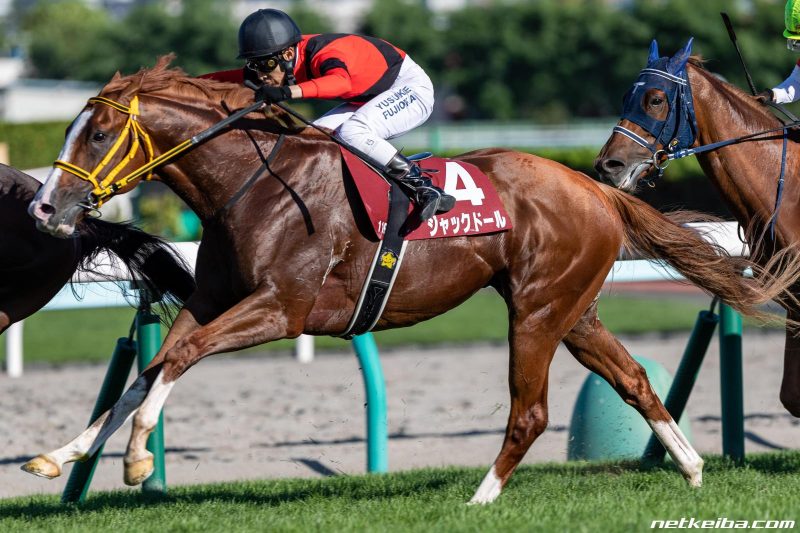
“There are no grade 1 stakes at (Japan Racing Association) during the summer season at the moment while valuable and prestigious summer grade 1s are conducted in other major horse racing countries, for example, at Deauville in France, Goodwood and York in UK, and Saratoga and Del Mar in the USA. Japan needs a summer grade 1 and I firmly believe that the Sapporo Kinen is the ideal race as it has enough race rating to be recognized as a grade 1.”
– Makio Okada, chairman of Sapporo Owners’ Association.
What makes a legend? Is it the amount of Grade 1 titles one is able to accumulate? How dominant the margins of their wins are against the toughest of opponents? The significance of their victories in the wider context? What if legacy begins, ends, or even resumes not in Nakayama, Tokyo, Kyoto, or Hanshin, but rather on humbler grounds? In Sapporo, glory shines through proven grounds and neither trophies nor distance will wipe away the effort.
Introduction & Context
All graded races are made to represent the heights of horseracing. Some are more invaluable than others and I don’t necessarily mean the elephants in the room that are the Group 1 races. Certain graded stakes over the course of the past few years or even decades have developed a reputation of being seen as an invaluable trial for top racehorses to take part in even if they don’t have the designated prestige set by G1 titles. Horseracing fans would colloquially call them “super-G2s” as while they’re mostly G2 races, their immediate value is so important in the lead-up to whichever G1 they provide a berth for, assigned or de-facto, that stacked competition feels imminent. Even a G1 winner wouldn’t wish to pass up on the opportunity to race in them to prove their readiness.
Among the most well-known examples in Japan is the Sapporo Kinen. First run in 1965 and first promoted to a G3 race in 1984 when the country introduced the grading system to its horseracing scene, it steadily developed a reputation as a go-to warm-up race for top performers right before the autumn season. In 1996 for one example, Marvelous Sunday won the race as his second graded title before moving on to win two more graded stakes and cap his year off with a second place in the Arima Kinen. In its inaugural promotion to G2 status in 1997 and 1998, Air Groove won the race as a prelude to a strong streak of placements within a mixed-sex lineup including two consecutive runner-up placings in the Japan Cup.
The competition and value surrounding the Sapporo Kinen has never slowed down since the 1990s. If anything, it becomes more and more valuable as a starting point for the autumn season. Top fillies or colts like Pandora Fusaichi in 2006 have won the race before moving on to win a G1 like the Queen Elizabeth II Cup while the likes of Sakura President have shown a track record of placing well in others. Recently, winners like Prognosis have shown their ability to deliver even in overseas races despite initially middling betting odds as a favourite. This success thus paves the way to a discourse surrounding whether the race should be promoted to a G1 status although the Japan Racing Association’s pickiness with how many G1s they have might leave the question unanswered for the time being…
Race Layout and General Assumption

Compared to the major racecourses that’s managed or funded by the JRA, Sapporo’s racecourse sticks out for two key reasons. The first is that there is virtually no undulation; at no point in the track is there a slope that goes up or down at any given point. It is entirely flat which means that jockeys won’t have to worry too much about prematurely nudging their rides to move forward or slow down to take full advantage of the layout. This means that the emphasis is placed strongly on the ability to maintain top speed under the hopes of having enough stamina to go out into a dramatic spurt.
The second key reason for Sapporo’s uniqueness is that the type of turf it uses is different from other racecourses. According to a well-known social media account which looks into Japanese horseracing named Kontena, the JRA’s go-to turf is Noshiba which tends to grow in a way that allows the turf to be more closely compact in a way that essentially makes quick tempo be encouraged in order for a racehorse to excel. Sapporo’s turf is Perennial Ryegrass which is similar to Europe’s and is frequently described as making the turf feel softer to run on.
This in turn makes for a deceptive run where the racehorse’s speed is not only going to be tested due to the flat course, but also how well they are able to manage their stamina due to running on naturally softer turf. Even the condition of the ground as being firm is going to differ in ways that isn’t going to guarantee similar finishing times as in Tokyo’s if the hooves are going to sink in just a bit deeper. Jockeys thus tend to have a more limited role in influencing how their rides will be able to cope with Sapporo’s unique characteristics aside from ensuring that they’re in a position that they’re at their most comfortable and as long as they’re aware of any openings to pass through for the win.
Ultimately, the Sapporo Kinen has a lot more layers in what it seeks out in its entrants than could be found in a naked eye. The blend of the softer turf and emphasis on speed leaves greater room for an upset win if the favourites struggle to adjust to it at race day and instead carries on with their usual run even if they unwittingly expend their own stamina at a faster rate than expected. Adaptability and internal speed management is key to succeeding for the racehorse should there be big plans ahead of the second half of the season.
Entrants

Favourites
Often well into the single-digits with their betting odds, the favourites possess the credentials, sky-high individual performances, and the pedigree which should allow them to deliver in the race.
Gate 4 – Magic Sands, Upping the Distance (Colt 4, 1 graded title)
In 2024, a certain newcomer broke through with a graded win as a 2-year old. The victory proves itself to be impressive enough that he entered the G1 Hopeful Stakes at the end of the year as one of the top favourites although his finishing position ended up being well in the double digits. His name is Magic Sands and while he has not won another graded race since then, fans have hoped that he follows the same road as his stablemate Faust Rasen and prove that he still has some drive in him to succeed.
His race records highlight his potential very well. Inconsistent as he looks with his form, he’s able to stabilise this year with a placement of being around 5th over his last few starts. His last 3 furlong times show his ability to put on a strong spurt on his best days as evidenced by his G1 Mile Championship’s 32.8 seconds even if it’s not electric enough for him to fly past oppositions. His typical position of being towards the back further fuels motivation for his spurt to be sharp as he ran in positions that are no higher than 7th place since his 2YO season. His jockey Kazuo Yokoyama is no stranger to making good use of midpack surgers as one of his best-known rides is top dirt runner Ushba Tesoro who excels in the position despite the ground type’s typical favouritism towards frontrunners. These aspects might not guarantee his victory here, but it does highlight the likelihood that he’ll do well.
Gate 7 – Shohei, Home Run Dreamer (Colt 4, 2 graded titles)
If you were to name the top three colts of last year’s Classics generation, the names that will likely come up are Croix du Nord, Museum Mile, and Masquerade Ball. Right below the three are Eri King, a Susumu Fujita-owned Kizuna foal whose strong spurt and promising stayer credibility are halted as of now by an injury; Giovanni, a perennial graded contender who usually looks consistent in his showing yet always fall short of winning a title; and then you have Shohei, whose strong showings in his two graded wins are offset with ease by his ability to fall short of even placing well in G1s as soon as he’s in a spotlight as a prospective favourite.
Shohei’s contention for this race lies in his strong pace-chasing ability. He typically runs behind the pacesetters and is able to worm his way into a strong enough spurt to win his race by a solid margin. This is exemplified best by his two graded wins in the G2 Kyoto Shimbun Hai to qualify for the Japanese Derby last year and this year’s G2 American Jockey Club Cup to warm up for the G1 Osaka Hai. His partnership with his main jockey Yuga Kawada is especially going to be beneficial as the latter is on a strong streak this year with a 21% win rate out of around 300 rides at the time of writing. His training time further demonstrates his seeming readiness with a strong spurt of 11.2 for a 1F time down from a 3F time of 39.8.
The key point that needs to be raised is that Shohei’s showings in an actual G1 tend to look too shaky to one’s liking. While he’s able to place 3rd in the Japanese Derby as the 6th favourite, he bombed out of the Kikuka Sho as the 3rd favourite into 14th place although the showing does suggest that he’s no natural stayer. It is the Osaka Hai when his showing especially flounders as he placed 10th even though his betting odds are a confident 6.1 as a 4th favourite. The good news at least is that the Sapporo Kinen is a G2 race. The real question is that even if he does win the race, would this be an avenue for him to win a G1 later on this year? Be it the G1 Autumn Tenno Sho or the G1 Bahrain International Trophy of which the Sapporo Kinen serves as a berth to, you would hope that this marks the point of him hitting his prime without any intent of letting it go.
Gate 8 – Sakura Farrel, New Era for the Old Crown (Colt 4)
Sakura Commerce Company was once a dynasty back in the early years of Japan’s horseracing scene after its graded system adoption. Many of the racehorses with the crown name of Sakura either won top races like Laurel with the G1 Arima Kinen and Chiyono O with the Japanese Derby or they’ve set a pathway towards popularising a specialty like Bakushin O with sprinting. However, the well of fortune soon dried up as the wave of more successful syndicates and companies soon forced a compromise on Sakura Commerce to accept only graded wins without the glory of a G1 being seen as a mere stepping stone.
Over the past years however, there are a handful of graded wins scored that provided hope that the company could climb its way back to its former prominence with Sakura Tonjours winning the G3 Tokyo Shimbun Hai in 2024 and the G3 Kyoto Kimpai in 2025. Tonjours however is an ageing gelding who’s trying to find a way to hit his highs before retiring soundly. A younger name called Farrel is hoping to symbolise the dawn of a new era for the company. Out of allowance class and showing promise with his first graded attempt in the G3 Epsom Cup, his training video shows his natural frontrunning tendencies of spurting away at any threat of being overtaken without needing a whip and his 3F time of 38.5 further shows his potential lying in wait to be fully unleashed. If there’s a race that’s waiting for him for a big break, this could be the one.
Gate 10 – Admire Terra, Raider of the Arc (Horse 5, 2 graded titles)
The last time we saw him in the G1 Spring Tenno Sho, Admire Terra put on an admirable 3rd place performance under decent circumstances. His main jockey Yutaka Take might not have gotten an ideal position towards the inner rail to conserve most of his stamina, but he’s able to pop off well enough with a decent spurt even if he’s fallen short of a G1 win. The big bit of news following the run is that Terra is set on running in the G1 Prix de l’Arc de Triomphe in France later this year. It’s a massive achievement for him to aim for given the glowing ambition of Japan to win one of, if not, Europe’s top non-derby race that regularly ranks as one of the best horse races in the world.
In the Sapporo Kinen as a de-facto trial however, Admire Terra will be facing several problems. Take will not be riding him as he’s currently stationed in Europe with Sixpence for the G1 Prix Jacques le Marois to claim one of the top mile races in the country. Even after that, he’s already bidding to ride another Arc contender Meisho Tabaru which means Terra needs another jockey to ride him to the best of his ability. The result? Ryusei Sakai whose records on turf aren’t as impressive as on dirt. At the very least, Admire Terra’s positioning tends to be behind the pacesetters and Sakai’s typical jockeying style errs toward a front-facing position. Having a third jockey to try and figure you out is going to be a big ask, but it could be better than Kawada, right? The training video to put it simply leaves big hopes that he’s in a good enough shape to do his best.
Gate 15 – Shake Your Heart, Spurting Spartan (Horse 6, 2 graded titles)
He first came through with a thud that is a G3 win in the Chunichi Shimbun Hai, then he thundered through to a G2 breakout in the Kinko Sho. Shake Your Heart sticks out as a narrative epic of sorts in that he spent much of his career coming up just short of breaking out of allowance class before surging his way through to two graded wins in relatively quick succession. His main jockey Yoshihiro Furukawa spent much of his career struggling to build on his dramatic G1 win in the 1997 Hanshin Juvenile Fillies with only the last decade seeing him collect more graded trophies to season up his experience. Together, the two have big dreams to achieve even though they are at an older age.
Shake Your Heart’s key strength lies in his sharp spurt; since his graded breakthrough does his L3F time especially stand out for hovering mostly in 33 seconds. His training time shows him to be the best-looking so far with a 4F time of 51.2, a 3F time of 37.3, & a 1F time of 12.1. His last run in the G1 Takarazuka Kinen might leave a question mark on how well he’ll deal with the softer turf given that he finished in 14th place on. It’s possible that his experience in Sapporo might be different and should he bag his third graded title, there’ll be greater ambitions to take him towards a G1 title like the Autumn Tenno Sho, the Bahrain International Trophy, or even the Breeders’ Cup Turf…
Dark Horses
With odds between 10 and 30-40 depending on the favourites, they look unremarkable compared to the top favourites. They do however have a notable history of placing well in graded titles and should the entries be stacked enough, even win at least 1 themselves. They simply appear to lack the “X-factor” needed to win the biggest championships in the country.
Gate 5 – Ecoro Walz (Horse 5)
Yet to have won a graded title, Ecoro Walz’s form nonetheless is one of consistency in a non-G1 race once his training and experience gets optimised towards 1800-2200m races after the 2024 Kikuka Sho. He’s able to at least place in the top three of the G3 Fukushima Kinen and the G2 Nakayama Kinen this year alongside a 4th place in last year’s Osaka Hai. His typically dependable form however suggests a relatively high performance floor with a low enough ceiling that makes any prospect of guaranteeing a graded title a challenge. Will this race be his to take?
Gate 6 – Rousham Park (Horse 7, 2 graded titles)
So close, yet so far. Rousham Park was once a promising contender for numerous G1 races with two consecutive graded wins back in 2023 and a close second place in the Breeders’ Cup Turf a year after. Recently, he was struggling to reach the ceilings that would have made him a legend however as he struggled to get a solid placement outside of a 3rd place in this year’s G2 Nikkei Sho. His jockey is Kenichi Ikezoe who’s similarly past his prime as the “Grand Prix Man” and his training time looks a bit stiff compared to the others. That being said, the Sapporo Kinen is no stranger to frequent upset wins and the possibility of Rousham Park being the one to claim the crown could boost up the hopes of many…
Gate 13 – Gran Dia (Gelding 7, 1 graded title)
The champion of this year’s G3 Niigata Daishoten which also happens to be his very last start, Gran Dia will be vying for an opportunity to strike up the heat whether possible. His partnership with Atsuya Nishimura is going to be a boon given the latter’s experience with handling solid surgers. And with how much he’s able to maintain his lead on the final straight in Niigata, he has a lot more hunger in him for success. However, Sapporo’s final straight is going to be relatively shorter which leaves less room for him to be able to maintain his spurt and he’ll be needing to keep watch of frontrunners like Sakura Farrel in case they’re not letting anyone bypass them…
Gate 15 – Ho O Biscuits (Horse 6, 1 graded title)
2024 looked like it would have been the year for Ho O Biscuits to pop off hard. He won the G3 Hakodate Kinen, placed second in the G2 Mainichi Okan, and then went third in the Autumn Tenno Sho. His promising form flatlines however since last year when, among coming short of adding more graded titles, he placed 7th in the Sapporo Kinen as the top favourite. Now, he’s struggling to rebound from his peak form with his last four starts seeing him place in the double digits. Hopes surrounding whether he’ll be able to succeed even further are at an all-time low, but horseracing is a type of sport that throws no punches when it comes to upsets. Will this be the much-needed breakthrough he needs to work back up to his old glories?
Handicapping
Essentially my predictions of who will go into the top 3 with 1 extra mention going to a contender outside the single-digit favourites who has a high chance at an upset, I feel that they are in the best possible form to win the race.
1 – Shake Your Heart
Shake Your Heart’s past record of strong spurts, combined with a solid training time, leaves him as someone who is the most likely to win the race. There will be question marks surrounding his ability to handle Sapporo’s turf given his bombing out of the Takarazuka Kinen. However, it is unlikely in this specific race that he’ll tire out even if the turf is typically softer compared to what he usually runs on. With his synergy with Furukawa, Shake Your Heart has the likely composure and discipline needed to win the race without too much strain.
2 – Shohei
The seeming favourite at first appears to have it all. A strong showing as soon as he gets his ideal spot, a top jockey who’s also his main one to dictate his moves with ease, and a much-needed spurt that could go even below 33 seconds if possible. Shohei’s tendency to “choke” in G1 races however makes for a challenge on whether he’ll do as well as the public would have expected him to perform if his opponents are able to run to the best of their abilities. If Sakai on Admire Terra is able to seize an opportunity with a turn on the final corner or if Furukawa is able to get Shake Your Heart to pick up on his speed prematurely, will Shohei be able to handle the sudden pressure?
3 – Sakura Farrel
The combination of a shorter final straight alongside a slightly longer distance leaves a very real possibility for Sakura Farrel to pop off in the Sapporo Kinen. His jockey Daisuke Sasaki is able to get numerous top 3 placements this year in a sign to suggest that he’s in a good enough shape mentally to direct his rides to a solid finish. Combined with his respectable training time, Sakura Farrel could revive the hopes that Sakura Commerce could climb its way back up to prominence once more.
Upset – Rousham Park
Rousham Park might not be at his best anymore, the same goes with Ikezoe, but the heights that were once there aren’t going to simply evaporate into nothingness just because he’s in a slump. The ability to pull off a strong spurt if needed and the promising hint that the 3rd place in the Nikkei Sho could be a return to form amounts to a good shot at an upset. If he’s able to deliver his best, he’ll have the whole country hyped up for his return.
Leave a Reply