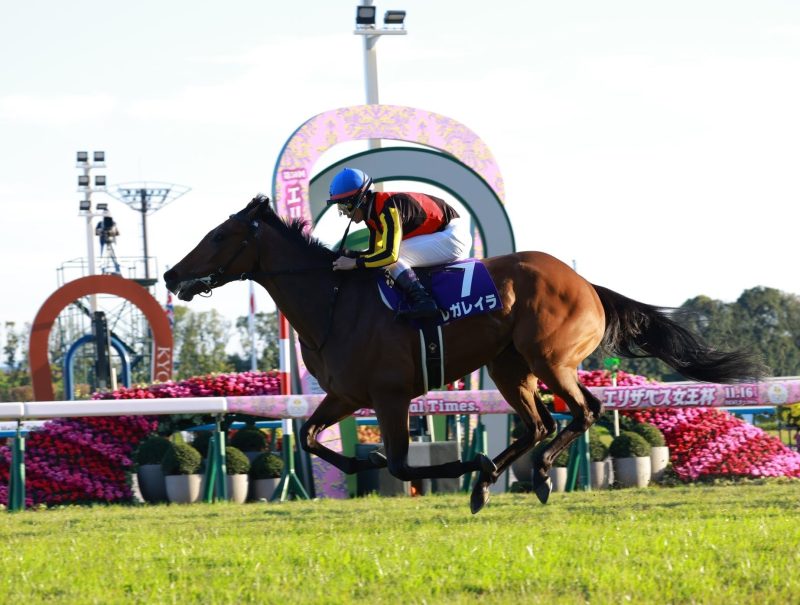
“The late Queen, who passed away in 2022 at the age of 96, was an exceptionally ardent rider and spectator. She may be credited with popularising the enjoyment of a day at the races among the general public. The monarch’s passion for horses and racing catalysed significant expansion in equestrianism in Britain, and she earned renown as a breeder when her horse finished second in the Epsom Derby.”
– The Royal Observer.
As time passes by, old dynasties fade while new houses assume their rightful throne. Generations have tried to assert their legacy for decades to come as they aim for the grand coronation of the ages. Many showed their talent in their bid to be adorned in the dispatch. A few showed glimmers to be mentioned in the history books. Only one will stand out as the legend in the centuries to come.
Introduction and Context
The Queen Elizabeth II Cup, formerly known as the Victorian Cup in its initial founding back in 1970, was first adopted as a name in 1976 as the then-intended final leg of the Triple Tiara series for three-year old fillies. It’s to commemorate the past year’s diplomatic visit to Japan by the late Queen Elizabeth II of the United Kingdom who’s known among horseracing fans for her interest in equestrianism. The race’s key role remained until 1996 when, with the establishment of the Shuka Sho as the designated final leg of the series, it was open to entry from 4YOs and over. This leaves Mejiro Ramonu as the only Triple Tiara champion to have won all three legs in 1986.
Intended to stand out as the defining championship among the female racehorses, the QEII Cup saw gradual development to add to its value as the key filly/mare-only race. Its designated Group 1 grading was recognised internationally in 2007 when it was won by Double Tiara champion Daiwa Scarlet. It’s open to overseas contenders since 1999 which was fully seized by Irish-British raider Snow Fairy who won twice in 2010 and 2011. The proximity and relatively easier competition from facing the same-sex field means that the G1 race stands as the designated follow-up to the Triple Tiara among those fillies who showed a strong enough showing even if they struggle to snag a Classic win.
The race’s schedule being close to the end of the year generally leaves its main role in setting up future starts toward two G1 directions- either the Arima Kinen for the domestic route or one of the Hong Kong Vase or Hong Kong Cup for an overseas attempt. The 2022 runner-up Win Marilyn pulled off her sole G1 win in the Hong Kong Vase. Lys Gracieux, who won the race back in 2018, soon placed 2nd in the same race prior to her whopping finale of a 5YO season. Last year saw champion Regaleira enter the Arima Kinen in the bid to pull off a rare dual victory in the same race (and the first female racehorse to do so) although she ended up placing a respectable 4th.
Among the previous past winners of the QEII Cup include: Mejiro Dober in 1998, regarded as one of the best fillies/mares in the country throughout the 1990s for her dominance in the same-sex races; Lucky Lilac in 2019 and 2020, the key rival of legendary Triple Tiara champion Almond Eye whose prowess was overshadowed by her contemporary’s achievements; and Sweep Tosho in 2005, following her breakthrough win in the G1 Takarazuka Kinen which heralded the golden age of fillies/mares as being equal to their other sex. This year will not contain a series of entrants who are known for holding their own against colts/older horses, but it will be a noteworthy sign on who will be the best female racehorse of the season.
Race Layout and General Assumption

The QEII Cup’s setting in Kyoto Racecourse combined with its distance of 2200 metres make for an ideal destination for younger fillies following their Shuka Sho participation. While the modest increase in distance by 1 furlong makes for a good bit of test for seeing whether a competitive endeavour in the Arima Kinen or other races in the similar distance is in play, the key challenge lies in the use of the outer ring. It might not be a clear test in being a stayer compared to the Kikuka Sho, but its big undulation on the upper-right corner puts more incentive into being able to maintain tempo while running upward. Comparatively, the other G1 race for female racehorses (albeit only for 4YO and over) which is the Victoria Mile is more manageable on paper due to its shorter distance although greater weight is placed on speed and reactivity.
The greater variety in entrants from different generations leave more diversity in how the tempo of the race will be run along with how manageable the temperaments are. 3YOs who have shown clear physical promise in their previous starts may find their temperament for whatever reason and while the same could be said of others, the relative inexperience could leave a bigger window for unforced errors. Older entrants who already have experience running in similar distances including at least one graded win (or several top 3 graded placements) are more prone to excelling in the race. Should a 3YO win, it’ll most likely come down to their physicality being in top shape.
The aforementioned diversity thus puts major weight on the jockeys to try and make full use of their rides. Most of them will likely stick to their main rides as long as there isn’t another one which necessitates the need to pick. It is safe to guide your ride in a way that ensures that they will go in their usual spot and run in their own way with enough signals for them to know when to spurt after all, especially if you know their preferences. That being said, those whose form are either seen as being in a state of decline or had been laid off for a while are more prone to getting some switches if their former jockey would rather opt to go for a better-looking ride (traitor).
In a nutshell, the QEII Cup generally puts emphasis on experience as the key aspect of being able to perform reliably well. A 3YO who’s good enough to win the race will most likely come down to her attitude being both calm and obedient enough as to not act out on top of possessing the strengths needed to bypass others. Expect a lot of top-down performances as a result where, barring a notable streak of overperformances such as Lilac between 2023 and just last year, the best runners will enjoy the best ride possible that allows them to go all out at their most comfortable.
Entrants

Favourites
Often well into the single-digits with their betting odds, the favourites possess the credentials, sky-high individual performances, and the pedigree which should allow them to deliver in the race.
Gate 7 – Kamunyak, Star of the Black Cross (Mare 4, 4 graded wins including 1 G1)
Following her 2nd place in this year’s Victoria Mile, last year’s Japanese Oaks winner went to rest for a spell rather than take part in other races like the Takarazuka Kinen or the G2 Sapporo Kinen. Kamunyak’s distance aptitude at least rules her out in being a top miler as her main rival Embroidery claimed glory before having her next start be next week’s G1 Mile Championship. There are interests surrounding how well Kamunyak was able to grow physically as while she came short of the win, that comes with two consecutive 2nd places with the other being the trial in the G2 Hanshin Himba Stakes. The class is still there, but she would want more room for her to charge up her spurt.
Kamunyak’s pedigree with her father being Black Tide, best known for siring one of the country’s decade-best racehorses in the 2010s with Kitasan Black, along with her broodmare sire being top sprinter Sakura Bakushin O in the early 1990s turn out to be a wombo combo. Her entry into the G2 Ireland Trophy as the trial run for the QEII Cup came with glowing anticipation over how she’s able to build up her muscle and with the extra furlong in play, she’s able to charge through to a breezy win. She’s now running in a distance that she’s shown herself to be a clear natural in and with her main jockey Yuga Kawada, she is more than ready for the main event.
The Japan Racing Association’s shared clip of Kamunyak’s training shows an emphasis on readying her for the undulation as she runs up the slope. With the clocked 4 furlong time being in 55.7 seconds, there’s an impression of ensuring that her run is at least optimised to not burn her out prematurely. Her training from the week prior however showcases the full extent to which she can dominate the race in the best-case scenario. She clocked in a 6F of 79.7, a 4F time of 50.4, and a 3F time of 35.7 which highlights her readiness in handling faster tempo along with being able to spurt for longer. That being said, she did struggle to accelerate more sharply which could be cause for concern if the tempo’s slower than anticipated.
A big point of concern for Kamunyak however is that as gifted as she is, she does have an incident running in Kyoto last year where, as the overwhelming favourite for the Shuka Sho, she placed a dismal 16th place despite going on a streak of three graded wins. This was attributed to her mood being sour which pushed her position towards running right behind the frontrunner rather than her seeming comfort of being in the midpack or further behind. Her records this year suggest that her temperament issues should have been ironed out with her mental maturity, but time will tell whether there’s more with regards to her and Kyoto’s racetrack in particular that would see her run sub-optimally to her performance highs…
Gate 9 – Queen’s Walk, Regal Aspirations (Mare 5, 3 graded wins)
Well into her third year of running, Queen’s Walk faces off a streak of near-misses when it comes to claiming a fabled G1 win. Her Classics season showed her struggle to place in the top 5 of the Triple Tiara barring a 4th place in the Japanese Oaks. In 2025, she netted a respectable win in the G2 Kinko Sho only to enter the Victoria Mile as her G1 goal where she placed 2nd only to the specialised miler Ascoli Piceno rather than the Osaka Hai. This year shows her settling into consistency as she claimed 3rd in the bid to defend her Kinko Sho glory before netting another 3rd place in the Victoria Mile against Embroidery and Kamunyak. Queen’s Walk is good for sure, but she isn’t one that you would describe as a monstrous mare in the making.
The inability to net a graded win since last year which culminated in a poor 8th place in this year’s Ireland Trophy saw Queen’s Walk get a shake-up in her status quo. Her initial main jockey Kawada went for the younger and more proven Kamunyak (traitor) while her last two starts with Atsuya Nishimura didn’t net her the win her connections would have wanted. The good news at least for this run is that she’ll be paired with Cristian Demuro who typically rides in Japan on a short-term license where he’s able to fish out several G1 wins. For the fillies/mares, he won the QEII Cup twice in 2022 and 2024 with Geraldina and Stunning Rose respectively. Surely that’s the kind of record that would make for an encouraging boost for her, right?
Queen’s Walk’s training puts a lot of focus towards her ability to deliver at a quicker tempo. While her time as a whole is slightly slower than Kamunyak’s from last week, it’s still sharp with a 3F time of 36.1 and a 1F time of 11.2. What makes her worth your utmost attention however is her training from a week before where her more relaxed 6F time of 84.5 contrasts with a sudden accelerating spurt which led to a 1F time of 10.7. There’s more flexibility in her ability to adapt to different tempos and with an experienced jockey on her, she doesn’t necessarily need to worry about whether he’s able to mesh with her on time. If Demuro’s able to let her run at her most comfortable in the race, she could spurt her way to victory.
Gate 11 – Juryoku Pierrot, Killer Punchline (Filly 3, 1 graded win including 1 G1)
In a lot of ways, Juryoku Pierrot’s trajectory this year is one that demands to be adapted into a biopic in the coming decades. Fans know her as the spell-binding winner of the Japanese Oaks whose jockey is a youthful dreamer in a scene that favours the veterans from overseas, an owner who’s only starting off in the industry, a trainer whose rise seemed overshadowed by others, and a sire in Orfevre whose breeding career falls short of his mythic racing glory. An initial goal towards the Shuka Sho for the Double Tiara veered from a health panic over her having a small bout of colic. It’s quickly resolved since then, but her fandom are otherwise worried on whether she’ll be able to perform up to her best when the target switches over to the QEII Cup. Not helping with the anxiety is that her genmates are largely struggling to claim an open-age graded race against older competition which leaves questions on whether she’ll be able to flex out her preferences toward certain tempos or maintain her calm.
The training video surrounding Juryoku Pierrot rests not so much on her physical fitness as it does her mentality. Tailing behind her training partner with her main jockey Seina Imamura riding her, she isn’t pressured nor does she feel the compulsion to overtake. Instead, she maintains her rhythm and runs in a way that feels disciplined as if to put full instinctive trust on Imamura on when to go all out or know which route to take. This puts her 6F time at a relatively slower 85.1 with the caveat that this is more based around her temperament than physical readiness.
The 3YOs this year were initially met with major hype over record-breaking finishing times in their age-restricted graded runs only for top speed to stand out as a clear specialisation above adaptability. There are a handful like Zoroastro or Star Anise who are able to compete with or even win a graded title against older competition, but that’s arguably attributed to their distance aptitude being in 2000m or under. Juryoku Pierrot’s health scare combined with her genmates’ struggles leave many doubts on whether she’ll be able to handle an open-age race. She does show talent in her spurt after all and Imamura can make great decisions on a good day, but the duo’s inexperience could serve as a double-edged sword at best. All you can say about that setback is that failure is a stepping stone if you want to get better. However, with Juryoku Pierrot’s last 3 furlong times being able to reach the lows of 33.1 in the Oaks and Imamura having a track record of suddenly delivering, they could pull off another major thriller of a win.
Gate 15 – Laughterlines, Blistering Catch-Up (Filly 3, 1 graded win)
In the first half of this year, Laughterlines looked as though she could well be the best filly of her generation. Her L3F time consistently goes below 33 seconds, she’s able to run well with different jockeys with her Oaks rider being Australia-based Damien Lane (for now, he’s applying for a full-time license to ride in Japan), and has shown her cut in a mixed-sex race with her G3 Kisaragi Sho run. Unfortunately, a handful of health concerns for the prep run in the autumn season pulled her away from entering the G2 Mainichi Okan to instead go straight to the QEII Cup.
With the possible main jockey next year in Lane being unavailable as he readies his move into Japan, Laughterlines gets a surprise substitution in Yutaka Take who rarely rides a horse owned by a Shadai-affiliated syndicate in Sunday Racing. The jockey’s other notable ride from the syndicate was Rose Kingdom with whom he won the 2010 G1 Japan Cup (albeit following the disqualification of Buena Vista for path obstruction). Given his experiences in riding top end closers like Deep Impact for the 2005 Triple Crown or more recently Do Deuce in 2024, there should be a pre-established synergy between the two that would make for a competitive showing.
Laughterlines’s training is notably more relaxed compared to Kamunyak’s and Queen’s Walk’s although there’s a natural tendency for her to overtake her training partner. Her 1F time of 11.9 might come off as unremarkable compared to the expectations set by her past records. The mentioned reflex to try and bypass whoever’s ahead of her however leaves a positive note that she has a competitive mindset that would allow her to put on an earnest performance. Like Juryoku Pierrot, there’s a lot that is riding on her as the best in her generation given their broad struggles against older competition. And much like Juryoku Pierrot, Laughterlines shows the talent that could be enough to put her over the edge.
Gate 16 – Aqua Vernal, Her Majesty’s Juggernaut (Mare 5)
Aqua Vernal stands out from the rest of the entrants on two factors. One is that she’s a rare natural female stayer with a breakthrough win this year on the open Manyo Stakes at the beginning before enjoying solid placements in the G2 Hanshin Daishoten (at 2nd place) and the G1 Spring Tenno Sho (4th). The other is that she’s remarkably comfortable in Kyoto in general; she began her autumn campaign this year with a third place in the G2 Kyoto Daishoten as more attention is drawn to her consistency as a grade-level contender. She’s yet to win one, but it’s hard to ignore the frequency of which she’s able to place in the top 4 this year within the upper quartile of the distance range.
Aqua Vernal’s key strength lies in her natural stamina. Her previous records suggest that she can pull off a solid L3F time when needed as shown with her Manyo Stakes win where she clocked 33.8 seconds. What’s notable is that she’s able to pull off manoeuvres under different turf conditions without tiring out early; her 3rd place in the Kyoto Daishoten could be attributed to her premature move to 3rd place between the final two corners which allows her to enjoy a positional advantage under softer turf. Should the tempo in the QEII Cup be blisteringly hot to the point where many end up gassing out on the final straight, there’s a good chance that she can maintain her momentum to a big graded win. Her training time especially has this scenario in mind as the slow 6F time of 87.5 shows an R&R focus on ensuring that she’s not overworked in preparation of the actual race’s conditions.
Aqua Vernal however does have a big challenge in her bid for the race. She doesn’t have a main jockey as per say as she shuffled around with different names throughout her racing career. Even in the beginning of this year did she change from Ryusei Sakai who rode her in the Manyo Stakes and the Hanshin Daishoten to Kohei Matsuyama in the Spring Tenno Sho and the Kyoto Daishoten. There’s a good chance that she could have her personal Achilles’ Heel where a specific set of conditions could blemish her track record in Kyoto just as there’s a possible hidden gear that turns her from a competitive runner to the top female racehorse of the season. How suitable is Matsuyama as her jockey for the race and will he be the perfect enough fit to give her a perfect run?
Dark Horses
With odds between 10 and 30-40 depending on the favourites, they look unremarkable compared to the top favourites. They do however have a notable history of placing well in graded titles and should the entries be stacked enough, even win at least 1 themselves. They simply appear to lack the “X-factor” needed to win the biggest championships in the country.
Gate 1 – Lavanda (Mare 5, 2 graded wins)
It took a while for Lavanda to find her footing as a sharp mare, but her rollercoaster of a career seems to have ironed out since this August with her G3 Chukyo Kinen win as well as a 2nd place in the G2 Ireland Trophy as the then-defending champion. Aside from the stand-in riding from Kazuo Yokoyama in the latter race, she’ll be enjoying the support from her main jockey Mirai Iwata who sticks by her side even during her poor performances. She only ran in one race that’s over 2000m which was the 2024 Japanese Oaks where she placed 11th. Doubts will sink in on her compatibility, but she will have Iwata’s backing to ensure that she’ll enjoy the best run she could get.
Gate 6 – Voulezvous (Mare 4)
Voulezvous took a good while to break through as she spent a whopping six-race losing streak where she didn’t even place in the top 5 at all. This July, she finally broke through with an open Tomoe Sho victory in a notably free-for-all field under softer turf. The current race conditions for the QEII Cup suggest a similar softening up of the ground which will make for a higher likelihood of fatigue building up quicker and greater difficulty in accelerating. Voulezvous shouldn’t worry too much about it however as following the Tomoe Sho, she placed 3rd twice in her next two graded attempts with her last start in the G2 All Comers being in soft turf. She could be the surprise expert in winning the race.
Gate 10 – Sekitoba East (Mare 5, 2 graded wins)
The likely pacesetter of the race, Sekitoba East’s defining achievement is her back-to-back G3 Fuchu Himba Stakes victory with her last one featuring her pulling off a stunning wire-to-wire win without serious opposition. Her records are rather feast-or-famine where her front-end position tends to make up for her subpar L3F times that never went under 34 seconds. Her main jockey in Suguru Hamanaka is most likely aware of her strengths and weaknesses, all things considered. Keep an eye on the two in case of a runaway bid towards the finish line ahead of the others.
Gate 12 – Shadow Meteor (Mare 4)
The late-blooming daughter of Orfevre spent almost her entire career in allowance hell where she needed to shuffle between different jockeys to get her to run to her full potential. It was only in August of this year when she won her 3-win race to enter open class to which she then followed up on with a decisive win in the listed Niigata Himba Stakes through a remarkable spurt on the final straight. Her jockey in Kosei Miura is no stranger to riding underdogs given his long-sought G1 win in last year’s Sprinters’ Stakes with Win Carnelian. Whether Shadow Meteor happens to be another hidden talent waiting to crack open against an ambitious lineup of contenders is a question that could only be answered in her very first graded attempt.
Gate 13 – Jocelyn (Mare 4, 1 graded win)
The winner of this year’s G3 Kokura Himba Stakes has shown herself to be a versatile runner in terms of positioning whose distance aptitude is similar to Kamunyak’s where they’re both not natural milers. Jocelyn however doesn’t enjoy the potential x-factor in having a main jockey to understand her best strengths which only serves to amplify the uncertainties regarding how she’ll be able to run the QEII Cup. Kudos where it’s due, she’ll be ridden by the one jockey who helped to net her her first graded win in Christophe Lemaire. It’ll be interesting to see whether the expert has any shenanigans that will allow her to pop off again as shown by her 2nd place in her last start that was the Ireland Trophy.
Gate 14 – Cervinia (Mare 5, 3 graded wins including 2 G1s)
The 2024 Double Tiara champion has more questions than answers when it comes to her contention for the QEII Cup. She’s only placed in the top 5 twice since last year with her former main jockey Lemaire having moved on from her in favour of other rides. She’ll be ridden by Tom Marquand who’s a Britain-based expert riding in Japan on a short-term license. Compared to Demuro however, Marquand didn’t win a G1 race which leaves doubt on whether he’s able to adapt to the nuances of the country’s style of horseracing while doing whatever he can to get Cervinia to reach her top potential. Could this be Cervinia’s long-awaited comeback?
Gate 18 – Koganeno Sora (Mare 5, 2 graded wins)
A small fan favourite for being the daughter of the beloved Gold Ship, Koganeno Sora’s career trajectory consists of her first graded win being a big victory in the open-age competition, a slump with only a 3rd place in last year’s Kokura Himba Stakes (which happened to be one of her only 2 starts in the season), and then a triumphant comeback in the G3 Fukushima Himba Stakes in the beginning of this year. Since then, she placed 5th in the Fuchu Himba Stakes and then pulled off a solid runner-up showing in the G3 Queen Stakes where she got her first graded win back in 2024. Between the outside gate draw and her jockey in Yuji Tannai who typically tends to ride long shots, could Koganeno Sora finally get the big break she’s been running towards her whole career?
Handicapping
Essentially my predictions of who will go into the top 3 with 1 extra mention going to a contender outside the single-digit favourites who has a high chance at an upset, I feel that they are in the best possible form to win the race.
1 – Kamunyak
Assuming that her Shuka Sho underperformance was down to temperament issues, Kamunyak feels like she should have both the experience and the talent needed to win the race with ease. Her last few starts clearly show her class in being able to place well despite the distances being a tad bit short to her liking and she’ll be accompanied by her main jockey Kawada. This race could well be her’s to lose.
2 – Juryoku Pierrot
While there are doubts surrounding her health as well as how strong she actually is outside of her generation, Juryoku Pierrot’s training leaves a big positive point where her mentality seems to have matured or at least ironed out to the point where she can fully focus on running. Her main jockey Imamura is inexperienced compared to the others, but she knows her ride so well that it could be a plus from the tactical perspective where she can fully trust Juryoku Pierrot to run to her fullest as she prioritises on navigation without too much micromanagement.
3 – Voulezvous
A big sleeper among the contenders, Voulezvous’s experiences allow her to have a good chance at winning the actual race. Her affinity with softer turf along with her promising performance at 2200m with a 3rd place in the All Comers could make for a big overperformance where she doesn’t need to rely too much on having a hidden top-class performance. She simply just needs to focus on running as usual.
Upset – Sekitoba East
Sekitoba East’s aggressive frontrunning stands out as the big x-factor that could allow her to pull off a major upset ahead of the others. If Hamanaka trusts her enough to pull off a runaway and she’s able to do so without contest until the final corner, there’s an opportunity for her to succeed before others are able to catch on to the actual pacing she’s running at. There is a big precedent to be had after all in big underdogs pulling off a stunning showing such as Twin Turbo’s 1993 All Comers win against Rice Shower.
Leave a Reply